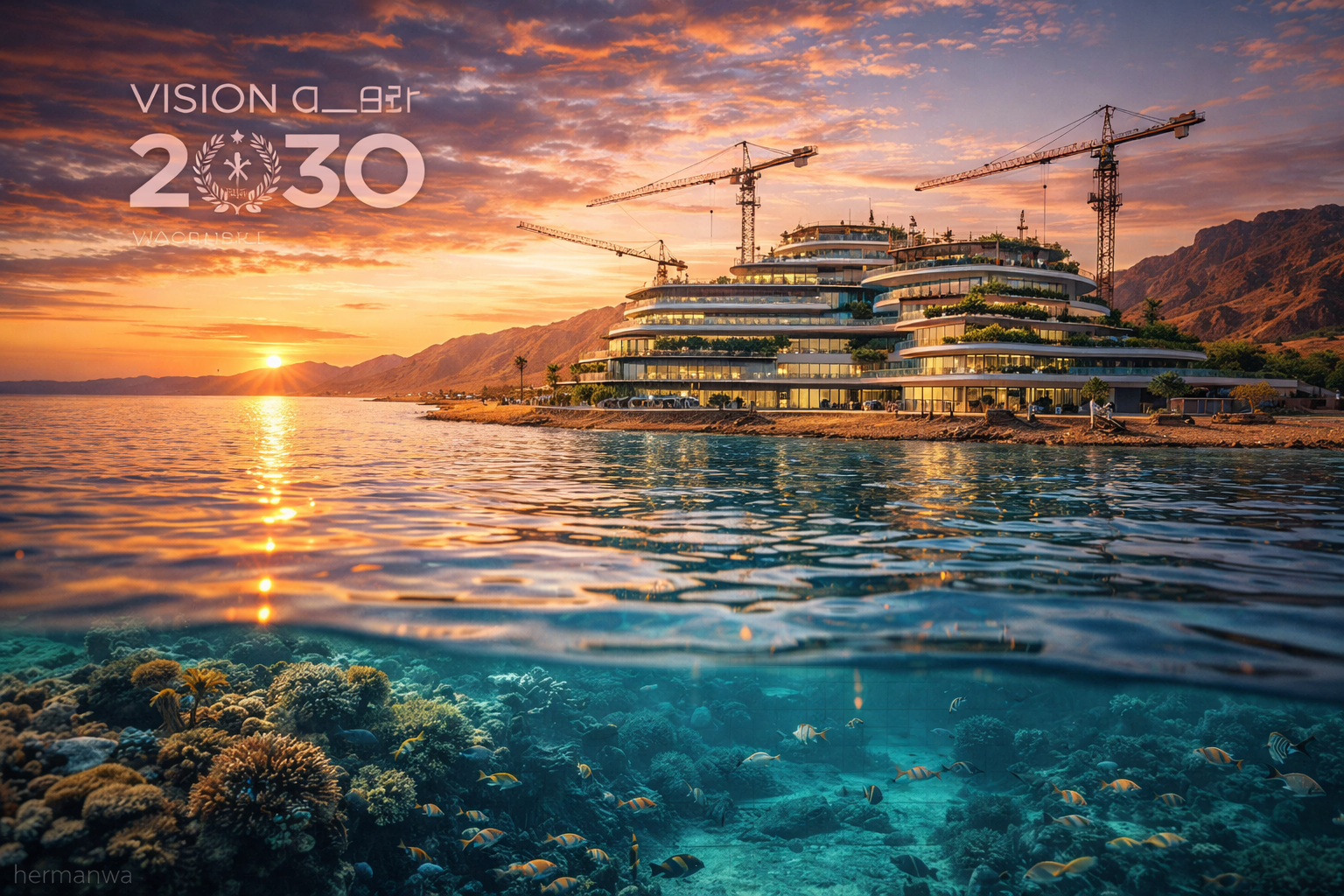
Saudi Arabia is executing the most ambitious tourism transformation in modern history. Vision 2030's target of 150 million annual visitors requires adding over 300,000 hotel rooms across the Kingdom, with sustainability requirements that exceed anything seen in traditional hospitality markets. For developers and operators, understanding these requirements is not optional; it is the price of entry.
This analysis examines the sustainability frameworks governing Saudi Arabia's giga-projects, the financing mechanisms that mandate green compliance, and the practical steps developers must take to participate in this unprecedented opportunity.
The Scale of Saudi Arabia's Tourism Ambition
Before examining sustainability requirements, it is essential to understand the magnitude of what Saudi Arabia is attempting. The Kingdom welcomed approximately 100 million visitors in 2023, already exceeding initial targets. The 2030 goal of 150 million visitors represents a transformation of the entire hospitality ecosystem.
Vision 2030 Tourism Targets
- 150 million annual visitors by 2030
- 320,000+ new hotel rooms required
- 10% of GDP from tourism (up from 3%)
- 1 million+ new jobs in hospitality
- SAR 250 billion annual tourism revenue target
This is not simply expansion. It is the creation of an entirely new tourism economy, anchored by giga-projects that have no precedent in scale, ambition, or sustainability requirements.
Giga-Projects: The Cornerstones of Saudi Tourism
Four flagship developments anchor Saudi Arabia's tourism strategy. Each operates with distinct sustainability mandates that developers must understand and meet.
NEOM: The City of the Future
NEOM represents a USD 500 billion bet on building a city from scratch with sustainability embedded in every system. THE LINE, Trojena, Oxagon, and Sindalah each have specific requirements, but NEOM's overarching sustainability framework applies across all developments.
Hotel developers at NEOM must comply with:
- 100% renewable energy: All developments must operate entirely on renewable power from day one. No fossil fuel backup systems are permitted for standard operations.
- Net-zero carbon operations: Hotels must achieve operational carbon neutrality without relying on offsets for Scope 1 and 2 emissions.
- Zero waste to landfill: Comprehensive circular economy requirements mandate on-site processing, recycling, and organic waste treatment.
- 90%+ water recycling: Advanced greywater and blackwater treatment systems must achieve near-complete water reuse.
- Carbon-positive materials: Construction specifications favor low-carbon concrete, mass timber, and materials with negative embodied carbon profiles.
The Red Sea Project: Regenerative Tourism
The Red Sea Global development spans 28,000 square kilometers and will eventually include 50 resorts across 22 islands. What distinguishes The Red Sea Project is its commitment to regenerative rather than merely sustainable tourism.
The development's sustainability charter mandates:
- 100% renewable energy for all hotel operations
- Net conservation benefit: The project must deliver 30% enhancement in local biodiversity compared to baseline conditions
- Carbon-neutral operations from opening day
- LEED Platinum or equivalent certification for all developments
- Marine ecosystem protection: Strict construction environmental management plans protect coral reefs and seagrass beds
- Dark sky compliance: Lighting restrictions protect nocturnal ecosystems and enable astro-tourism
Non-Negotiable Standards
The Red Sea Project has rejected hotel concepts that could not meet sustainability requirements. Several international brands withdrew proposals after determining compliance costs made projects unviable. Developers should not assume exemptions or waivers will be granted; the sustainability charter is enforced rigorously.
AMAALA: Ultra-Luxury Wellness
AMAALA targets the ultra-luxury wellness segment, positioning itself as the "Riviera of the Middle East." The development spans three distinct communities: Triple Bay, The Coastal Development, and The Island. With room rates expected to exceed USD 1,500 per night, sustainability is positioned as a core value proposition rather than a compliance burden.
AMAALA sustainability requirements include:
- 100% renewable energy with on-site solar and grid-connected renewable supply
- Green building certification mandatory for all developments
- Sustainable transport: Electric and hydrogen vehicle infrastructure only
- Wellness-integrated sustainability: Indoor environmental quality standards exceed typical hospitality benchmarks
- Local sourcing commitments: F&B operations must meet minimum local and regional procurement thresholds
Qiddiya: Entertainment and Sport
Qiddiya focuses on entertainment, sports, and culture, targeting domestic visitors and regional tourism. While sustainability requirements are less stringent than The Red Sea or NEOM, Qiddiya still mandates green building standards and renewable energy integration.
Key requirements include:
- Green building certification for all commercial developments
- District cooling systems powered by renewable energy
- Water efficiency standards aligned with national conservation goals
- Electric vehicle infrastructure throughout the development
- Waste reduction targets with mandatory recycling programs
| Giga-Project | Hotel Rooms (2030) | Renewable Energy | Carbon Target | Certification Required |
|---|---|---|---|---|
| NEOM | 10,000+ | 100% mandatory | Net-zero operations | NEOM Sustainability Charter |
| Red Sea Project | 8,000+ | 100% mandatory | Carbon-neutral | LEED Platinum or equivalent |
| AMAALA | 3,000+ | 100% mandatory | Net-zero by 2030 | Green building certification |
| Qiddiya | 5,000+ | Partial integration | Reduction targets | Green building certification |
Green Finance Requirements
Sustainability requirements are not merely regulatory; they are embedded in financing structures. Accessing capital for Saudi hotel development increasingly requires demonstrating green compliance.
Public Investment Fund (PIF)
PIF is the primary driver of giga-project investment and a major co-investor in hospitality developments. The fund has committed to net-zero emissions across its portfolio by 2050, with interim targets affecting investment decisions today.
Projects seeking PIF participation must demonstrate:
- Alignment with Saudi Green Initiative commitments
- Clear decarbonization pathways for operations
- Sustainability governance structures
- ESG reporting capabilities meeting international standards
Tourism Development Fund (TDF)
TDF provides financing specifically for tourism projects, with favorable terms for developments meeting sustainability criteria. The fund offers:
- Loans up to SAR 1 billion for qualifying projects
- Reduced rates for certified green buildings
- Extended tenors for sustainable developments
- Blended finance structures combining TDF capital with commercial lenders
TDF Green Finance Criteria
To access preferential TDF financing, hotel projects must meet at least three of the following criteria:
- Green building certification (LEED, BREEAM, or equivalent)
- Renewable energy providing 50%+ of operational energy
- Water recycling systems achieving 70%+ reuse
- Waste diversion rate of 80%+ from landfill
- Local employment and procurement commitments
Green Sukuk and Sustainability-Linked Loans
Saudi Arabia's capital markets increasingly offer green financing instruments. Hotel developers can access:
- Green sukuk: Sharia-compliant bonds financing certified green buildings
- Sustainability-linked loans: Margin reductions tied to achieving ESG KPIs
- Green loans: Purpose-specific financing for renewable energy, efficiency upgrades, and sustainable construction
International lenders active in Saudi Arabia, including major European and Asian banks, now require ESG due diligence as standard practice for hospitality financing.
Practical Steps for Developers
Meeting Saudi Arabia's sustainability requirements demands systematic planning from project inception. Here is a practical framework:
1. Early-Stage Sustainability Integration
Sustainability must be embedded in concept design, not retrofitted later. Priority actions:
- Engage sustainability consultants during site selection and master planning
- Model energy and water demand using Saudi-specific climate data
- Evaluate certification pathways and select target ratings
- Identify renewable energy procurement options (on-site, PPA, grid)
- Conduct baseline biodiversity and environmental assessments
2. Design for Operations
Design decisions determine 80% of operational sustainability performance. Focus areas:
- Building orientation and envelope: Minimize cooling loads through passive design
- HVAC systems: Specify high-efficiency equipment with smart controls
- Water systems: Design for greywater separation and treatment
- Lighting: LED throughout with occupancy and daylight sensing
- Materials: Specify low-carbon, locally sourced, and circular materials
3. Construction Environmental Management
Giga-project authorities monitor construction impacts closely. Requirements typically include:
- Construction environmental management plans (CEMPs)
- Dust and noise monitoring with defined thresholds
- Construction waste segregation and recycling
- Erosion and sediment control measures
- Marine protection plans for coastal developments
4. Operational Readiness
Pre-opening, establish the systems needed for sustainability compliance:
- Energy and water metering with real-time monitoring
- Waste tracking and reporting systems
- Staff training on sustainability procedures
- Guest engagement programs
- Supply chain sustainability requirements for vendors
5. Certification and Reporting
Formal certification and ongoing reporting demonstrate compliance:
- Complete green building certification (LEED, BREEAM, Mostadam)
- Establish annual sustainability reporting aligned with GRI or SASB
- Implement carbon accounting covering Scope 1, 2, and material Scope 3
- Consider third-party verification of key metrics
Planning a Saudi hospitality development?
Our team helps developers navigate sustainability requirements across giga-projects. Get expert guidance from concept to certification.
Schedule a ConsultationTimeline and Milestones
Understanding the phased rollout of Saudi tourism helps developers prioritize opportunities:
| Year | Milestone | Implication for Developers |
|---|---|---|
| 2024 | Red Sea Phase 1 complete (16 hotels) | Proof of concept for regenerative tourism model |
| 2025 | NEOM Sindalah opens; AMAALA Phase 1 | First NEOM hospitality operations; luxury segment validation |
| 2026 | Qiddiya Phase 1; expanded Red Sea operations | Domestic and regional market development |
| 2027 | Trojena ski resort; AMAALA expansion | Winter tourism segment launches |
| 2028 | THE LINE initial residential and hospitality | NEOM's flagship linear city begins operations |
| 2030 | Vision 2030 tourism targets | Full giga-project operational scale |
Challenges and Risk Factors
Developers should approach Saudi opportunities with clear understanding of risks:
- Execution complexity: Sustainability requirements add design and construction complexity, requiring specialized expertise
- Cost premiums: Green buildings typically cost 5-15% more than conventional construction, though operational savings offset this over time
- Supply chain constraints: Sustainable materials and systems may face procurement challenges at giga-project scale
- Skills gaps: Operating high-performance sustainable hotels requires trained staff, which remains scarce in the region
- Evolving requirements: Standards continue to tighten; designs must anticipate future regulatory direction
Due Diligence Essential
The scale of investment and specificity of requirements demand thorough due diligence. Engage local advisors with direct giga-project experience. Sustainability commitments made in development agreements are legally binding; failure to meet them can result in financial penalties and reputational damage.
Summary
Saudi Arabia's Vision 2030 tourism targets represent one of the most significant hospitality development opportunities globally. However, sustainability is not a differentiator in this market; it is the baseline requirement for participation.
Developers who succeed will be those who:
- Integrate sustainability from project inception, not as an afterthought
- Build teams with genuine expertise in sustainable hospitality development
- Establish systems for ongoing measurement, reporting, and improvement
- View sustainability requirements as value drivers, not compliance burdens
- Engage early with giga-project authorities to understand specific requirements
The Kingdom is building the future of sustainable tourism. The question for developers is whether they are prepared to meet that future's requirements.